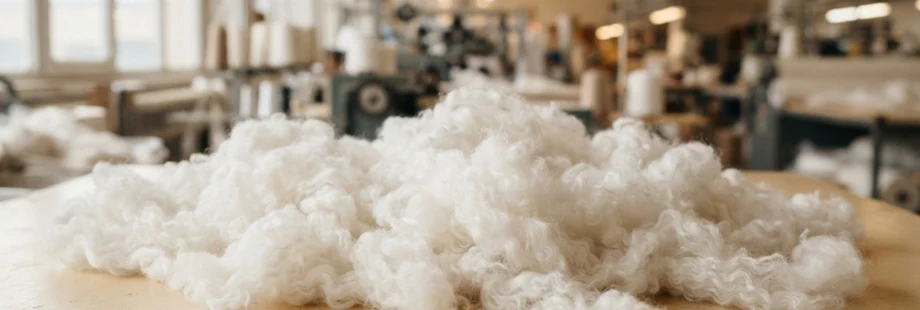
Choosing polyester staple fiber for spinning and blending is not simply a matter of comparing price, denier or cut length. The appropriate material direction depends on the spinning system, blend component, target yarn and the result expected from the finished product.
A useful sourcing brief should therefore begin with the process. Even when the complete fiber specification is not available, buyers can provide the known parameters and identify the remaining items as open for review. This creates a clearer starting point for product matching, sample evaluation and quotation.
Before requesting a polyester staple fiber quotation, define the spinning system, known fiber fineness and cut length, blend component and ratio, target yarn or end use, appearance or functional direction, estimated quantity and destination. If a parameter is not finalized, state “Not sure” instead of guessing.
1. Start with the spinning system
The spinning route gives context to every other part of the inquiry. A fiber specification that is discussed without the intended process may leave important questions unanswered. The buyer should identify the spinning system and any known equipment or processing constraints before moving to individual fiber parameters.
This does not mean that a buyer needs to provide a complete technical report. A short description of the process is often enough to organize the first review:
- What spinning system will be used?
- Is the polyester intended for a pure-polyester yarn or a blend?
- Which other fiber components will enter the process?
- Are there known feeding, drafting, carding or yarn-formation priorities?
- What problem is the new material expected to solve?
When these details are not fully defined, explain the current trial stage and the intended yarn. The objective is to give the supplier enough process context to ask the right follow-up questions.
2. Confirm fiber fineness and cut length
Fiber fineness and cut length are two of the first parameters buyers usually discuss for polyester staple fiber. They should be treated as part of the spinning brief rather than as isolated numbers.
Fineness may be expressed in denier or dtex. It relates to the linear density of the individual fiber and can influence the character of the fiber assembly and the resulting yarn. Cut length describes the length of the staple fiber supplied for processing. The appropriate direction must be considered together with the spinning system, blend plan and target yarn.
For an effective inquiry, state:
- The required fineness and unit, if already specified.
- The required cut length and unit, if known.
- Whether the values come from an existing production specification, a trial material or a new development brief.
- Which parameters may be adjusted during evaluation.
Avoid converting an uncertain requirement into a fixed number only to complete an RFQ. Writing “Not sure — specification advice required” is more useful than submitting an incorrect parameter.
3. Define the blend component and ratio
For blended yarns, the other fiber component and intended ratio are central to the material discussion. Buyers may be evaluating polyester with cotton, viscose, wool or another component, but the important point is to describe the actual blend plan rather than assume that one polyester direction fits every combination.
The inquiry should distinguish between three situations:
- Existing production: the blend ratio and target yarn are already established.
- Material replacement: the buyer wants to evaluate another polyester option within an existing route.
- New development: the blend ratio or fiber specification may still change after trials.
State the other blend component, target ratio and acceptable evaluation range when these are known. If the ratio is not finalized, describe the performance, appearance or processing objective that is guiding the development. The blend ratio supplied in an inquiry is a process input; it is not, by itself, a guarantee of finished-yarn performance.
4. Work backwards from the target yarn and end use
The same material description can be interpreted differently when the target yarn changes. A buyer should therefore include the intended yarn count or construction when available, together with the end use and the priorities that matter in the finished product.
Useful information can include:
- Target yarn count and count system.
- Pure polyester or blended-yarn direction.
- Knitting, weaving or another downstream route.
- Expected fabric or finished-product use.
- Appearance, hand feel, strength, color or processing priorities that require evaluation.
Not every requirement needs to become a contractual specification at the inquiry stage. The purpose is to show what the fiber will be asked to do so that the product discussion stays connected to the buyer’s actual application.
5. Keep the material form clear
Polyester staple fiber, polyester filament yarn and polyester tops are different material forms and should not be mixed within one product request. This article concerns short-cut polyester staple fiber used in a spinning and blending route.
If the application instead requires continuous filament yarn for weaving or knitting, use the Weaving & Knitting sourcing route. If the requirement concerns polyester tops for a wool-blend or worsted process, use the Wool-Blend & Worsted route.
Keeping the material form clear at the first contact prevents unrelated products and parameters from entering the same quotation.
6. Clarify material, appearance and functional direction
After the process and core fiber parameters are described, add any material or appearance direction relevant to the request. This may include a virgin or recycled route, color, luster or a functional requirement.
Use precise language about the requirement without assuming that a named function is automatically available in every fineness, cut length or color. The supplier needs to review the requested combination against an actual product and the intended test method.
When a specific document, standard or declaration is required, list it in the RFQ. Document availability should be confirmed for the selected grade and legal entity rather than assumed from a general website description.
7. Plan the sample evaluation before requesting a sample
A sample request is most useful when it includes an evaluation purpose. “Please send a PSF sample” gives little direction. A better request explains the spinning route, known fiber specification, blend component, target yarn and what the trial is intended to confirm.
Before requesting a sample, prepare:
- The intended spinning system and blend plan.
- The known fineness and cut length.
- The target yarn or downstream product.
- The trial quantity or sample format needed for evaluation.
- The properties or processing observations that will be reviewed.
- The destination and requested timing.
Sample availability, format and timing need to be confirmed for the specific request. A structured brief helps both sides decide whether the proposed sample is relevant before arranging shipment.
Polyester staple fiber RFQ checklist
The following checklist can be copied into an email or used to prepare an online inquiry:
- Spinning system and relevant equipment context.
- Known fiber fineness in denier or dtex.
- Required cut length.
- Virgin, recycled or open material direction.
- Blend component and target ratio.
- Target yarn count, construction or end use.
- Color, luster or functional requirement.
- Estimated quantity and unit.
- Destination country and port.
- Requested timing, sample purpose and required documents.
Price, order quantity, packing, lead time, documents and product availability should be confirmed against the selected grade, order details and destination.
Can I inquire without a complete specification?
Yes. A buyer does not need to invent missing information. Start with the spinning system, blend plan and target yarn, then identify the known and unknown fiber parameters. The Spinning & Blending application page provides a structured form for this purpose.
If the basic fiber parameters are already defined, buyers can also review the published Polyester Staple Fiber catalog before sending the inquiry. Published product information remains a starting point; the final selection and commercial terms require confirmation.
Frequently asked questions
Is denier enough to identify the correct PSF?
No. Fineness is one part of the specification. Cut length, spinning route, blend plan, target yarn, appearance and functional requirements may also affect the product discussion.
Should I ask for a quotation or specification advice first?
Request a quotation when the material and commercial requirement are sufficiently defined. Choose specification advice when the spinning route and target result are known but some fiber parameters remain open.
Are MOQ and lead time fixed for all polyester staple fiber products?
No fixed MOQ or lead time is stated in this guide. These details need to be confirmed for the selected product, specification, quantity, packing and destination.
Can PSF, filament yarn and polyester tops be quoted together as one material?
They should be treated as separate material forms. Use the relevant product category and application route for each requirement so that the parameters remain clear.
Specification-led inquiry
Not sure which PSF direction fits your spinning route?
Share the spinning system, blend plan, target yarn and known fiber parameters. Unknown items can be marked “Not sure” for review.